Zero Landfill. Every Pallet.
We do not discard what others throw away. Every board that enters our facility exits as product, energy, or organic matter — never trash. Zero truckloads to landfill since 2019.
Get a Quote — It's Free
The pallet industry generates enormous volumes of wood waste. Most operators take the path of least resistance: dumpster, hauler, landfill. We built a completely different infrastructure — one where every piece of wood, every nail, and every end-of-life plastic pallet finds a productive second life.
Since launching our dedicated recycling program in 2016, Norwalk Pallets has maintained a zero-landfill commitment across all wood waste generated at our facility at 319 Wilson Ave, Norwalk CT. Through biomass energy partnerships, municipal composting agreements, landscaping mulch distribution, and metal and plastic recovery — every material stream has a destination that is not a landfill.
Our zero-landfill record has been unbroken since 2019 — not a single full truckload of pallet material has been sent to landfill in over six years. This is not a marketing claim; it is an operational reality backed by tonnage records, transfer manifests, and partner facility confirmations.
2,400+ tons
Wood diverted from landfill in 2024
97%
Landfill diversion rate across all processed pallets
0
Full truckloads sent to landfill since 2019
12
Active biomass and compost partner facilities
61%
Estimated carbon reduction vs. all-new pallet use
100%
Heat-treated wood managed to regulatory standards
18,000+
MWh equivalent energy generated from our wood chips (2024)
340 tons
Mulch distributed to CT landscaping and municipal programs
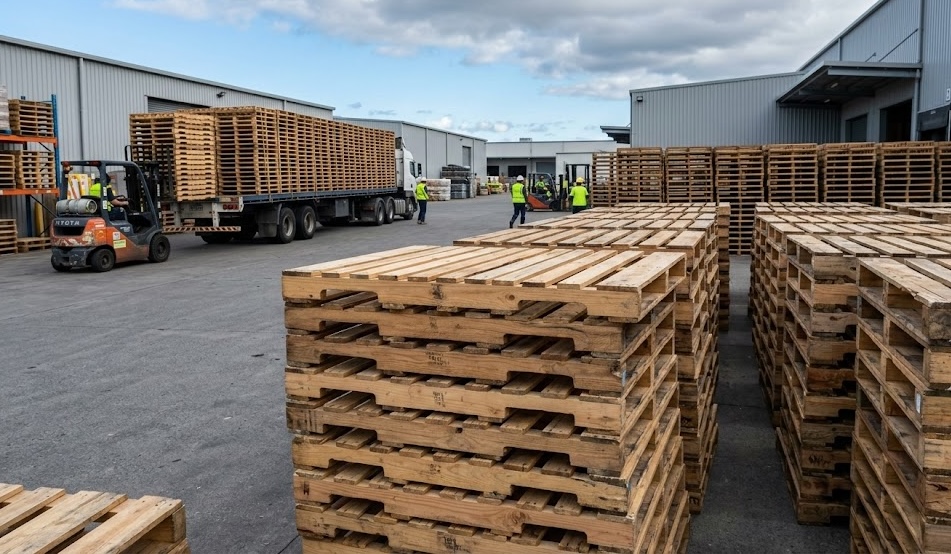
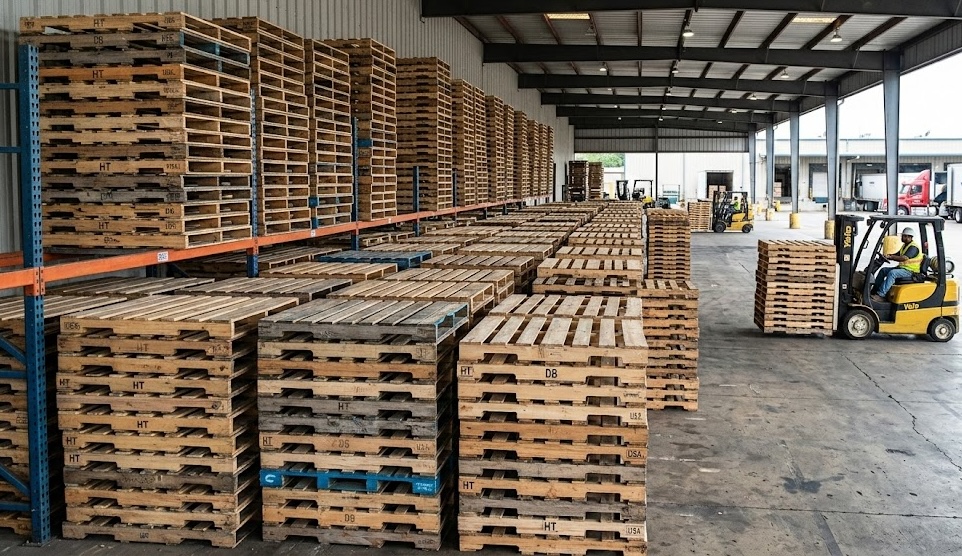
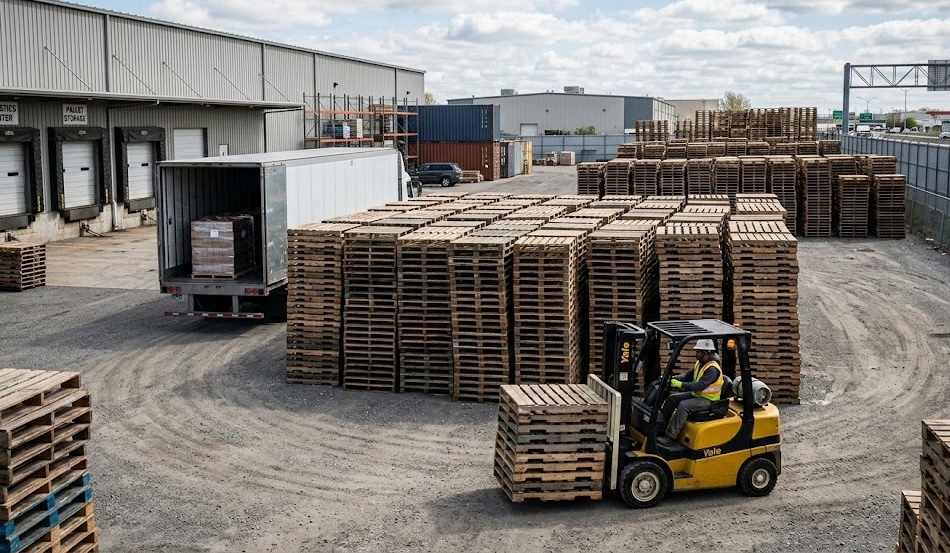
From Pallet to Purpose — 8-Step Recycling Process
Our recycling process is designed to extract maximum value from every piece of material before it exits our facility. Nothing moves to a lower-value stream until every higher-value option has been exhausted.
Intake & Initial Assessment
Every pallet arriving at our 319 Wilson Ave facility is individually assessed by our intake team. Pallets are sorted into three streams: (1) resale-ready, (2) repairable, and (3) recycling. Only pallets that cannot be economically repaired enter the recycling stream. This triage maximizes the useful life of every piece of wood before it moves to material recovery.
Dismantling & Board Recovery
Pallets entering the recycling stream are manually or mechanically disassembled. Clean, usable boards are separated and returned to our repair program — a typical end-of-life pallet still contains 2–4 boards worth recovering. Metal fasteners (nails, screws, staples) are captured and segregated for metal recycling. Nothing is wasted at this stage.
Shredding & Chipping
Non-usable wood is fed into our industrial shredder-chipper, which produces two output streams. Biomass-grade chips are sized to specifications required by our energy-facility partners (typically 2–4 inch chips with controlled moisture content). Landscaping-grade mulch is produced as a finer grind suitable for garden beds, pathways, and erosion control.
Treated Wood Segregation
Heat-treated (HT) and chemically treated wood is identified by stamps, markings, or visual inspection and separated from the general recycling stream. Treated wood follows a dedicated biomass pathway — it is never used for composting or mulch that contacts soil. This segregation complies with Connecticut DEEP regulations and EPA guidelines for treated wood waste management.
Biomass Energy Transfer
Biomass-grade wood chips are transferred to our network of 12 partner energy facilities across Connecticut and Southern New England. These facilities convert wood chips into clean electricity and thermal energy through controlled combustion. One ton of wood chips generates approximately 8,000–10,000 BTU of energy — powering homes and businesses instead of filling landfills.
Compost & Mulch Distribution
Mulch-grade material is distributed to regional landscaping companies, municipal composting operations, and garden supply retailers. Our mulch is chemical-free (untreated wood only), consistent in texture, and available in bulk quantities. Several Connecticut municipalities use our mulch for public park and playground surfacing.
Metal & Plastic Recovery
Metal fasteners captured during dismantling are collected in bulk and sent to regional metal recyclers. End-of-life plastic pallets (HDPE) are processed through our plastic recycling partners for reprocessing into new plastic products. No material stream — wood, metal, or plastic — goes to landfill.
Documentation & Certification
We provide Certificates of Recycling for clients who need documentation for sustainability reporting, ESG disclosures, corporate waste audits, or regulatory compliance. Certificates include: date, material type, weight, processing method, and destination facility. Available upon request for any recycling transaction.
What We Recycle
End-of-Life Wood Pallets
Any wood pallet that is beyond economical repair — broken beyond 60% structural loss, severely warped, or delaminated. All grades, all sizes.
Pallet Scraps & Cutoffs
Lumber scraps, broken boards, and cutoff pieces from pallet manufacturing and repair operations.
Crates & Skids
Wooden shipping crates, skids, and dunnage material that has reached end of life.
Heat-Treated Pallets
HT-stamped pallets are accepted and routed through our segregated treated-wood biomass stream.
Plastic Pallets (HDPE/PP)
End-of-life plastic pallets made from HDPE or polypropylene are collected and sent to plastic recyclers.
Metal Fasteners
Nails, screws, and staples captured during dismantling are collected for metal recycling — zero steel to landfill.
Mixed Wood Waste
Unsorted loads of mixed pallet wood, lumber scraps, and clean wood waste from your facility.
Materials We Cannot Accept for Recycling
Chemically contaminated wood (pesticides, solvents, creosote, CCA-treated)
Painted wood with unknown or lead-based paint
Wood with active mold or extensive fungal infestation
Plywood, OSB, MDF, or engineered wood products (different recycling stream)
Construction & demolition debris mixed with non-wood materials
Biohazard or medical waste containers
Where Each Material Goes
Repairable Wood Boards
Re-enters our repair program, becomes part of a Grade B or C pallet with years of service life remaining
Clean Wood Chips (Biomass)
Transferred to 12 partner energy facilities across CT and Southern New England — converted to electricity and thermal heat
Mulch-Grade Material
Distributed to landscaping companies, municipal composting facilities, and garden supply retailers across Connecticut
Treated Wood (HT/Chemo)
Segregated biomass stream only — dedicated treated-wood energy recovery. Never used for compost or soil-contact applications
Metal Fasteners (Nails/Screws)
Collected in bulk and sent to regional metal recyclers for scrap steel recovery — zero metal to landfill
Plastic Pallets (End-of-Life)
HDPE and PP plastics sent to polymer recyclers for reprocessing into new plastic products and materials
Sawdust & Fine Particles
Used as animal bedding material by regional agriculture partners or added to composting operations as carbon amendment
Recycling vs. Landfill Disposal
Recycling is not just better for the environment — it is dramatically cheaper than landfill disposal. Connecticut landfill tipping fees are among the highest in the nation. Here is how the numbers compare.
| Factor | Recycling (Norwalk Pallets) | Landfill Disposal | Your Advantage |
|---|---|---|---|
| Cost per ton | $0 – $15/ton (free for qualifying volumes) | $65 – $120/ton (CT landfill tipping fees) | Save $50–$120/ton |
| Pickup logistics | Free pickup for 200+ pallets within 75 miles | Dumpster rental + hauling fees | No rental or hauling costs |
| Environmental liability | Certificate of Recycling documenting proper handling | Potential long-term liability for landfill contributions | Documented compliance |
| Corporate reporting | ESG-ready metrics: tons diverted, CO2 offset, energy recovered | Negative waste metric on sustainability reports | Positive ESG story |
| Regulatory compliance | CT DEEP compliant processing at a permitted facility | Must ensure hauler and facility are properly permitted | Single-vendor compliance |
| Speed | Pickup within 3–5 business days of scheduling | Depends on dumpster availability and hauler schedule | Faster turnaround |
Commercial Recycling Contracts
Whether you need a one-time cleanout or an ongoing recycling partnership, we offer flexible contract options designed for businesses of every size.
Standing Recycling Agreement
For businesses generating consistent wood waste, we offer standing recycling agreements with scheduled pickup frequency (weekly, bi-weekly, or monthly). Fixed pricing, guaranteed truck slots, and monthly reporting included.
On-Demand Recycling Pickup
No contract required. Call us when you have a load ready and we schedule pickup within 3–5 business days. Pay per pickup or receive free service for qualifying volumes. Ideal for seasonal or irregular waste generators.
Facility Cleanout Service
Closing a warehouse, relocating, or cleaning out accumulated pallet stock? We handle full facility cleanouts — pallets, crates, skids, and clean wood waste. One visit, complete removal, Certificate of Recycling issued.
Multi-Location Programs
For companies with multiple facilities across our service area, we coordinate recycling pickups across all locations under a single master agreement. One contact, one invoice, consolidated reporting.
Waste Hauler Partnerships
We partner with regional waste haulers and dumpster companies to redirect wood waste from landfill to our recycling facility. If you are a waste hauler, contact us about becoming a transfer partner.
Mulch & Biomass Programs
Our recycling process produces two valuable byproducts: biomass-grade wood chips for energy generation and landscaping-grade mulch for commercial and municipal use.
Product Quality
Our mulch is produced from clean, untreated wood only. Consistent grind size, free of metal fasteners, and suitable for residential and commercial landscaping applications.
Bulk Availability
Mulch is available in bulk quantities (by the cubic yard) for landscaping contractors, municipalities, and garden centers. Seasonal availability peaks in spring and fall.
Delivery
Mulch delivery available within our standard service area (CT, Southern NY, Western MA). Pricing depends on volume and distance.
Municipal Programs
Several Connecticut municipalities use our mulch for public park pathways, playground surfacing, and erosion control. Municipal pricing available on request.
Certifications & Compliance
EPA WasteWise Partner
Norwalk Pallets is a registered EPA WasteWise partner, committing to annual waste reduction goals, transparent reporting, and continuous improvement in waste diversion practices. WasteWise recognition validates our zero-landfill commitment at the federal level.
ISPM-15 Certified Facility
Our facility is ISPM-15 certified for heat treatment and treated wood handling. All treated wood waste is identified, segregated, and processed through dedicated streams that comply with IPPC phytosanitary standards. This certification ensures our recycling processes meet international standards for treated wood management.
CT DEEP Compliance
All wood waste processing, transfer, and storage operations at our Norwalk facility comply with Connecticut Department of Energy and Environmental Protection (DEEP) solid waste regulations. We maintain current permits for wood waste processing and transfer operations, with regular inspections confirming compliance.
Certificate of Recycling (CoR)
Available upon request for every recycling transaction. Our CoR documents the date of processing, material type and weight, processing method (biomass, compost, or material recovery), and the destination facility. Used by clients for ESG reporting, ISO 14001 audits, and corporate sustainability disclosures.
NWPCA Member
As a member of the National Wooden Pallet and Container Association, we adhere to industry best practices for pallet repair, reuse, and recycling. NWPCA membership ensures our operations meet the highest standards for quality and environmental responsibility in the pallet industry.
Industry Standards We Follow
NWPCA Pallet Recycling Best Practices
We follow National Wooden Pallet and Container Association guidelines for the collection, sorting, repair, and recycling of wooden pallets, including chain-of-custody documentation and material tracking.
EPA Sustainable Materials Management
Our recycling program aligns with EPA SMM principles: reduce, reuse, recycle — in that order. We repair first, recycle second, and landfill never.
ASTM D1185 Standard Specification
Pallets are assessed against ASTM D1185 structural performance criteria during triage to determine whether repair or recycling is the appropriate pathway.
CT DEEP Solid Waste Management Regulations
Our wood waste processing operations are permitted and inspected under RCSA Section 22a-209, covering the storage, processing, and transfer of solid waste including wood and pallet materials.
Real Results From Real Clients
Regional Food Distributor — Fairfield County
Challenge
A 200,000 sq ft distribution center was sending 800–1,000 damaged pallets to a dumpster each month, paying $4,200/month in hauling and tipping fees.
Solution
We implemented a bi-weekly recycling pickup program. Repairable pallets enter our repair stream and are resold. Non-repairable wood is recycled through our biomass and mulch programs.
Result
The client eliminated $50,000/year in waste disposal costs, diverted 240+ tons of wood from landfill annually, and now includes our recycling metrics in their corporate ESG report.
Contract Manufacturer — Stamford CT
Challenge
A contract packaging operation was accumulating 300–400 mixed-grade pallets per week with no efficient disposal system. Pallets were stacking up in their parking lot, creating safety and code compliance concerns.
Solution
We set up a weekly pallet exchange program: deliver fresh Grade B pallets for their shipping needs and simultaneously collect surplus/damaged pallets for buyback and recycling.
Result
The client freed up 2,000+ sq ft of yard space, reduced pallet purchasing costs by 15% through buyback credits, and established a zero-waste pallet program that passed their ISO 14001 audit.
Warehouse Facility Cleanout — New Haven County
Challenge
A closing warehouse had 6,000+ pallets of mixed condition — a combination of usable, repairable, and end-of-life inventory — that needed to be removed within 30 days of lease termination.
Solution
Our team conducted a full on-site assessment, purchased the usable and repairable pallets at buyback rates, and recycled the remaining end-of-life wood at no additional cost to the client.
Result
Complete facility cleanout in 12 days using 8 truck trips. Client received $8,400 in buyback payments and a Certificate of Recycling covering 18 tons of recycled wood. Zero pallets went to landfill.
Our Recycling Partner Network
Our zero-landfill commitment is only possible because of a robust partner ecosystem across Connecticut and the Southern New England region. These 12 organizations represent the downstream infrastructure that turns our processed wood into energy, mulch, compost, and recovered materials.
Connecticut Biomass Energy Co-op
Southern CT Municipal Composting Network
New Haven County Landscaping Cooperative
Regional HDPE Plastic Reclaimer
Bridgeport Green Energy Partners
MetroWest Mulch & Organics
Hartford Renewable Energy Facility
Litchfield County Composting Authority
New England Scrap Metal Consortium
Westchester County Recycling Partnership
Springfield Municipal Energy Recovery
Long Island Sound Environmental Alliance
Frequently Asked Questions
Is pallet recycling free?
For qualifying volumes (200+ pallets within 75 miles of Norwalk), recycling pickup is completely free. For smaller quantities or greater distances, a nominal pickup fee may apply — quoted upfront. You can also deliver pallets to our facility at 319 Wilson Ave, Norwalk CT at no charge.
What happens to my pallets after recycling?
Repairable pallets are fixed and resold. Non-repairable wood is shredded into biomass chips (sent to energy facilities) or mulch (sent to landscapers and composters). Metal fasteners are sent to metal recyclers. Plastic pallets go to polymer recyclers. Zero material goes to landfill.
Can I get a Certificate of Recycling?
Yes. We provide Certificates of Recycling upon request for any recycling transaction. The certificate documents: date, material type, approximate weight, processing method, and destination facility. Certificates are accepted for ESG reporting, ISO 14001 audits, and corporate sustainability disclosures.
Do you accept chemically treated pallets?
We accept heat-treated (HT) pallets, which are routed through our segregated treated-wood biomass stream. We do not accept chemically treated pallets (CCA, creosote, pesticide-contaminated) as they require specialized hazardous waste handling outside our scope.
How is recycling different from your buyback program?
Our buyback program pays you cash for pallets that have resale or repair value. Recycling is for pallets that are beyond economical repair and have no direct resale value. Many loads include both — we sort them on intake and you receive buyback payment for the resaleable units and free recycling for the rest.
What areas do you cover for recycling pickup?
All of Connecticut, Southern New York (Westchester, Putnam, Dutchess, Orange, Rockland counties), Western Massachusetts (Hampden, Hampshire, Worcester counties), and parts of Rhode Island. Contact us for locations outside this range — we may be able to accommodate based on volume.
Can I set up a regular recycling schedule?
Yes. Our Commercial Recycling Contracts include standing agreements with weekly, bi-weekly, or monthly pickup schedules. You get a guaranteed truck slot, fixed pricing, and monthly reporting for your sustainability records.
Do you recycle plastic pallets?
Yes. End-of-life HDPE and polypropylene plastic pallets are collected and sent to our polymer recycling partners for reprocessing. Plastic pallet recycling is available as part of any pickup — just include them with your wood pallets.
How does your recycling compare to landfill disposal costs?
Connecticut landfill tipping fees average $65–$120 per ton for solid waste. Our recycling service is free for qualifying volumes, and even when a pickup fee applies, total cost is typically 70–90% less than landfill disposal. See our cost comparison section for details.
Can I buy your mulch or wood chips?
Yes. Our mulch program sells clean, untreated wood mulch in bulk quantities for landscaping, playground surfacing, and erosion control. Available for delivery within our service area. Contact us for pricing and seasonal availability.
Schedule a Recycling Pickup
For qualifying volumes, recycling pickup is free. We will assess your material, schedule logistics, and provide a Certificate of Recycling for your records. Zero material goes to landfill.